In the modern material packaging field, sawdust bagging machines stand out for their specialized design, efficiently transforming loose, dusty sawdust into well-formed, easily transportable bagged products. Understanding the unique features and core working principles of this equipment helps us better leverage its effectiveness.
From an external perspective, a typical sawdust bagging machine usually consists of several modular parts: a sturdy frame for support; an upper feeding hopper with a vibrating or spiral mechanism and a high-precision weighing module; a central core of flexible robotic arms or bag-gripping mechanisms for grasping and opening the packaging bags; and a lower conveyor belt to transport the finished products. Its control center is often a user-friendly touchscreen, highly integrated, and compact in structure to save factory space. Other notable features include excellent sealing to control sawdust dust and robust, wear-resistant contact parts to withstand the friction of the sawdust.
Its working principle is a sophisticated automated process that can be broken down into four interconnected core stages: weighing, bagging, dropping, and conveying. First, in the “precise weighing” stage: sawdust is fed into the weighing hopper via a controlled feeding device (such as a servo motor-driven screw). Weighing sensors monitor the weight in real time, switching to slow, precise feeding when approaching the target value, and stopping immediately upon reaching the set value to ensure consistent weight across all bags. Second, in the “intelligent bagging” stage: a bag-retrieving device (possibly a vacuum suction cup or mechanical gripper) removes an empty bag from the bag magazine and accurately delivers its opening to the bag clamp. The bag clamp opens and firmly holds the bag, ready for filling.
Next, in the “rapid material discharge and bag release” stage: the discharge gate below the weighing hopper opens, and the weighed sawdust quickly falls into the bag. Due to the low density and loose volume of sawdust, the equipment is often equipped with vibration or compaction devices to ensure the bag is fully filled. After filling, the bag clamp releases, and the fully loaded bag falls onto the conveyor belt under gravity. Finally, in the “smooth conveying” stage: the conveyor belt starts, transporting the packaged bags to the next station for sealing (such as sewing or heat sealing) or stacking. The entire process is controlled by a PLC (Programmable Logic Controller), with sensors providing real-time feedback to ensure smooth and accurate operation. It is this working principle based on precise sensing and programmed control that enables the wood chip bagging machine to achieve efficient, clean, and continuous operation.
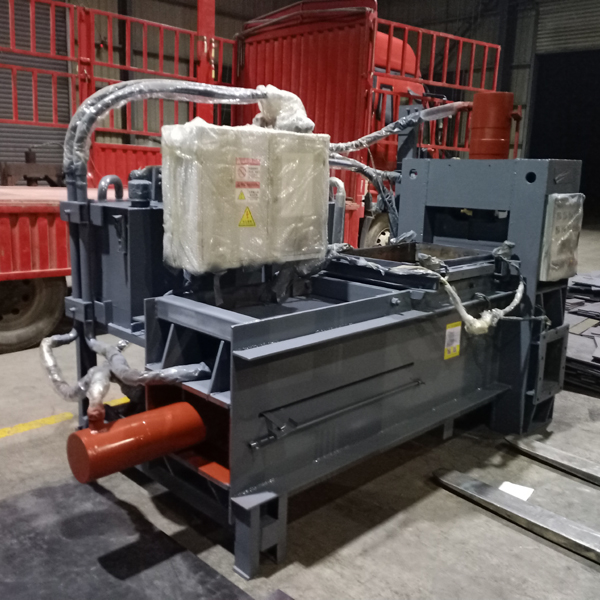
Nick Baler’s bagging machines offer a high-efficiency solution for compressing, bagging, and sealing lightweight, loose materials, including agricultural waste, sawdust, wood shavings, textiles, fibers, wipers, and biomass waste. By converting loose materials into compact, easy-to-handle bags, these machines ensure efficient storage, improved cleanliness, and minimized material loss.
Whether you’re in the livestock bedding industry, textile recycling, agricultural processing, or biomass fuel production, Nick Baler’s advanced bagging balers help streamline operations by reducing waste volume and improving material handling. With over 20 years of experience, we deliver customized solutions that enhance efficiency, durability, and automation in material packaging.
Nick machinery bagging machine adopts PLC control system, which is easy to operate and accurately controlled; the automatic feeding and conveying device increases the feeding speed and maximizes the production volume. https://www.nickbaler.net
https://www.nkbaler.com
Email:Sales@nkbaler.com
WhatsApp:+86 15021631102
Post time: Jan-08-2026