After purchasing a plastic bottle baling machine, knowing how to operate it correctly, efficiently, and safely is essential knowledge for every new user. The operation process is not as complicated as it seems, but following the standard procedures is a prerequisite for ensuring efficiency and safety. The operation of a typical hydraulic baler can generally be summarized into several stages: preparation, loading, compression, strapping, and unloading.
Before use, meticulous preparation is necessary. This includes checking the integrity of all parts of the equipment, especially the hydraulic oil level, power lines, and switch status. Clean the work area to ensure no debris can affect operation. Then, conduct a simple no-load test run according to the equipment manual, observing for any abnormal noises or vibrations. During the formal operation stage, for semi-automatic models, the initially sorted plastic bottles need to be manually fed into the baler’s hopper. Once the material reaches the preset amount or the hopper is full, the compression function is activated. At this time, the hydraulic system drives the pressure head forward, forcefully compressing the loose plastic bottles into compact blocks.
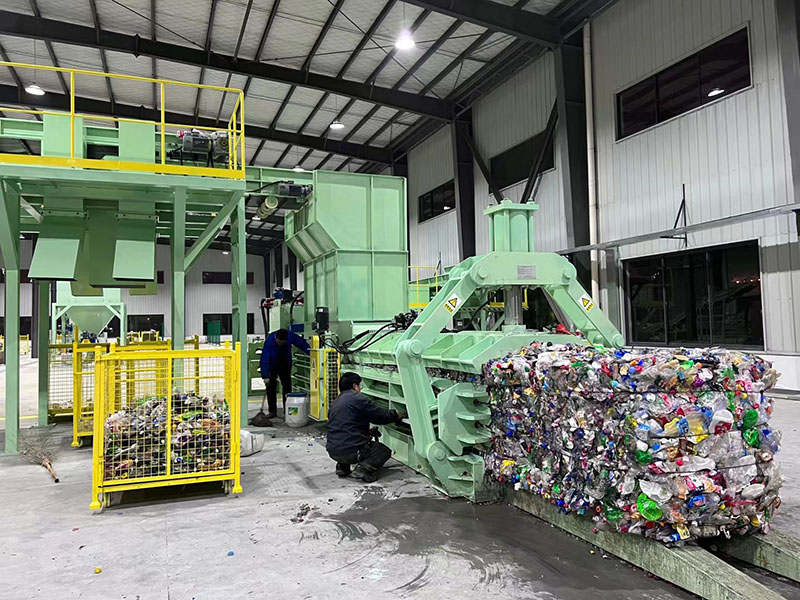
After compression, the machine will maintain pressure or lock the pressure head. Operators must manually or automatically bind the material blocks horizontally and vertically using strapping (usually polyester or steel strapping) to ensure their shape is fixed. After secure binding, release the pressure or open the hopper door, and the compressed material blocks are ejected, completing one work cycle. Fully automatic models integrate these steps, automatically feeding via a conveyor belt and controlling automatic compression, binding, and unpacking via a PLC system. Crucially, operators must be trained, familiar with the meaning of every button and indicator light on the control panel, and strictly adhere to safety procedures during daily use, such as strictly prohibiting hands from entering the compression area and ensuring that the equipment is monitored during operation.
Nick Baler’s plastic and PET bottle balers offer a highly efficient and economical solution for compressing various plastic waste materials, such as PET bottles, plastic film, HDPE containers, and shrink wrap. Ideal for waste management facilities, recycling centers, and plastic manufacturing plants, these balers can reduce plastic waste volume by more than 80%, significantly improving storage capacity and lowering transportation costs.
Available in manual, semi-automatic, and fully automatic models, Nick Baler’s equipment accelerates waste processing, reduces labor requirements, and boosts productivity for businesses engaged in large-scale plastic recycling operations. By streamlining waste compaction, these balers help industries enhance sustainability while cutting operational expenses.
https://www.nkbaler.com
Email:Sales@nkbaler.com
WhatsApp:+86 15021631102
Post time: Jan-30-2026