Plastic bottle balers are the key tool in transforming mountains of discarded plastic bottles into neat, compact square bales. However, for first-time users, mastering the correct, safe, and efficient operation of this machine is essential knowledge. While the operating procedures vary depending on the level of automation, they generally follow a series of standard steps, with the core goal of achieving a balance between safety and efficiency.
For common semi-automatic horizontal balers, operation begins with preparation: checking that all components are functioning properly, ensuring the power supply and hydraulic oil levels are within acceptable limits, and removing any residue from the baling hopper. The operator must then feed the sorted plastic bottles (it is generally recommended to remove the caps and any remaining liquid) into the baler’s hopper. Once the material reaches the preset amount or the hopper is full, the compression program is initiated. At this point, the hydraulic system drives the pressure head forward, forcefully compressing the loose plastic bottles and expelling most of the air. After compression, the operator must manually or via control buttons guide the threading device to pass baling rope or wire through the specific slots in the compressed bale for securing it. After secure binding, the compression force is released, and the bale ejection device pushes out the formed bale, completing one work cycle. Throughout the process, keep your hands and feet away from moving parts, especially the pressure head area.
For fully automated production lines, the focus is more on monitoring and start-stop control. Operators may only need to set parameters (such as bale size and density) through a human-machine interface (HMI), and the equipment can automatically complete feeding, compression, binding, bale ejection, and even counting and stacking. Regardless of the level of automation, proper use requires regular maintenance: cleaning the machine, checking for leaks in hydraulic lines, tightening loose parts, and replacing worn strapping and filter elements on time. Thoroughly reading the equipment manual and receiving professional training from the supplier are prerequisites for ensuring operators can effectively use the baling machine, extending equipment life, and ensuring safe production.
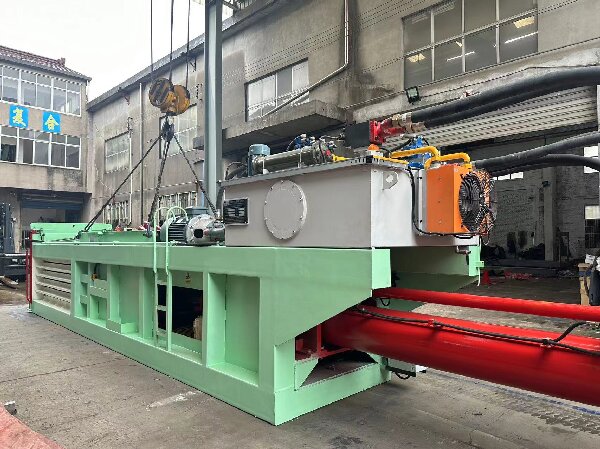
Nick Baler’s plastic and PET bottle balers offer a high-efficiency, economical solution for compressing various plastic waste materials such as PET bottles, plastic film, HDPE containers, and shrink wrap. Ideal for waste management centers, recycling facilities, and plastic production companies, these balers can reduce plastic waste volume by more than 80%, maximizing storage capacity and streamlining transportation logistics.
Available in manual, semi-automatic, and fully automatic configurations, Nick Baler’s equipment accelerates waste processing, lowers labor expenses, and boosts productivity for businesses engaged in large-scale plastic recycling operations.
https://www.nkbaler.com
Email:Sales@nkbaler.com
WhatsApp:+86 15021631102
Post time: Dec-23-2025