When a brand-new Sawdust Baler Machine arrives at the production workshop, ensuring its rapid, safe, and efficient operation is a concern for every operator and manager. Using a Sawdust Baler Machine is not simply a matter of pressing a switch; it involves a standardized process encompassing preparation, operation, monitoring, and post-operation.
Preparation before use is crucial. First, ensure the equipment is installed on a flat, solid surface and leveled to guarantee weighing accuracy and operational stability. Next, connect the power and air supply (if the equipment is pneumatically driven), checking that the voltage and air pressure are stable and meet the equipment requirements. Then, based on the characteristics of the sawdust to be packaged (such as particle size, moisture content, and specific gravity), set the target packaging weight, bagging speed, and other key parameters on the control panel. Simultaneously, prepare the appropriate size packaging bags and correctly install them into the bag hopper or bag loading device. Finally, conduct a no-load test run to check that all moving parts, such as the bag clamping mechanism, weighing sensors, and conveyor belt, operate smoothly and accurately.
During the formal operation phase, a cycle of “start-up-loading-monitoring-adjustment” is typically followed. After starting the equipment, operators may need assistance with the initial bagging process (this step can be omitted for fully automatic models). Once the sawdust enters the weighing hopper via a screw conveyor or belt conveyor and reaches the preset weight, the system will automatically stop feeding and execute a series of actions including bagging, loosening, and dropping. The operator’s core task is to monitor the entire process: observe whether the feeding is smooth and without blockages; whether the weighing is stable within the allowable error range; whether the bagging position is accurate; and whether the sealing is secure. Production output, fault alarms, and other information can be viewed in real time via a touchscreen or control cabinet.
Safety regulations during operation are crucial. Operators should avoid wearing loose clothing to prevent being caught in moving parts; it is strictly forbidden to reach into the protective cover for adjustments or cleaning while the equipment is running. When a shift ends or when changing packaging types, the standard shutdown procedure must be followed: first, stop feeding; after all material inside the equipment has been emptied and the last bag has been completed, then turn off the main power and air supply. Finally, clean and maintain the equipment surface and key components (such as weighing sensors and photoelectric switches) to prepare for the next use. Mastering this operating method is the foundation for ensuring the long-term and stable performance of the sawdust bagging machine.
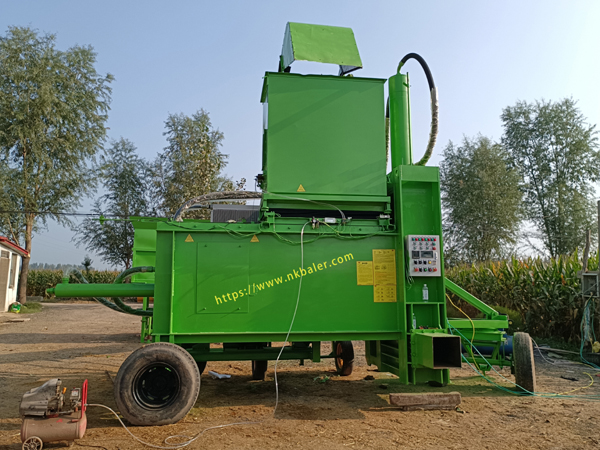
Nick Baler’s bagging machines offer a high-efficiency solution for compressing, bagging, and sealing lightweight, loose materials, including agricultural waste, sawdust, wood shavings, textiles, fibers, wipers, and biomass waste. By converting loose materials into compact, easy-to-handle bags, these machines ensure efficient storage, improved cleanliness, and minimized material loss.
Whether you’re in the livestock bedding industry, textile recycling, agricultural processing, or biomass fuel production, Nick Baler’s advanced bagging balers help streamline operations by reducing waste volume and improving material handling. With over 20 years of experience, we deliver customized solutions that enhance efficiency, durability, and automation in material packaging.
Nick machinery Sawdust Baler Machines are mainly used for packaging wood chips, sawdust, straw, paper scraps, rice husks, rice sugar, cotton seeds, rags, peanut shells, cotton fibers and other similar loose fibers. https://www.nickbaler.net
https://www.nkbaler.com
Email:Sales@nkbaler.com
WhatsApp:+86 15021631102
Post time: Jan-08-2026