With the rapid development of technologies such as Industry 4.0, the Internet of Things, and artificial intelligence, waste paper balers, as traditional industrial equipment, are standing at a crossroads of technological innovation. Future waste paper balers will no longer be limited to the basic function of “compression,” but will evolve towards greater intelligence, efficiency, environmental friendliness, and connectivity.
Intelligentization and adaptive control will be the core trends. Future balers will be equipped with more powerful sensor networks and AI algorithms, capable of automatically identifying the type, humidity, and even composition of the input materials, and adjusting the compression pressure, number of straps, and baling program in real time to achieve optimal baling results and energy efficiency. Predictive maintenance functions will become widespread; equipment will analyze data such as vibration, oil temperature, and pressure to provide early warnings of potential faults, transforming “reactive maintenance” into “prevention maintenance,” greatly improving equipment utilization. Secondly, higher energy efficiency and environmental standards will be emphasized. The application of new hydraulic systems (such as variable frequency drives and servo control) will be more extensive, enabling on-demand energy supply and significantly reducing standby and no-load energy consumption. Noise control technology, leak-proof design, and the use of biodegradable hydraulic oil will receive greater attention in environmental details. Modular and flexible design will also be highlights, enabling equipment to more easily adapt to changing customer needs and facilitating upgrades and functional expansion.
The deep integration of the Internet of Things (IoT) will transform equipment management. Balers will become nodes in the factory’s IoT ecosystem, uploading real-time data on output, energy consumption, and operational status to a cloud platform. Managers can remotely monitor the operation of multiple devices via mobile phones or computers, perform data analysis, and optimize production scheduling and supply chain management. Production data can even be directly integrated with downstream manufacturers, achieving supply chain transparency and efficient collaboration. Furthermore, the ability to handle special materials (such as mixed waste paper and wet waste paper), as well as further improving single-machine processing capacity, compression ratio, and reliability, remains a constant challenge for technological development. In short, future waste paper balers will be intelligent entities integrating mechanical, hydraulic, electrical, information, and artificial intelligence technologies, playing a more central and intelligent role in the resource recycling system.
Nick Baler’s waste paper and cardboard balers are designed to efficiently compress and bundle materials like corrugated cardboard (OCC),Newpaper,Waste Paper,magazines,office paper,Industrial Cardboard and other recyclable fiber waste.These high-performance balers help logistics centers,waste management facilities,and packaging industries reduce waste volume,improve operational efficiency,and cut transportation costs.
As global demand for sustainable packaging solutions grows,our automated and manual baling machines provide the perfect solution for businesses handling large volumes of recyclable paper materials.
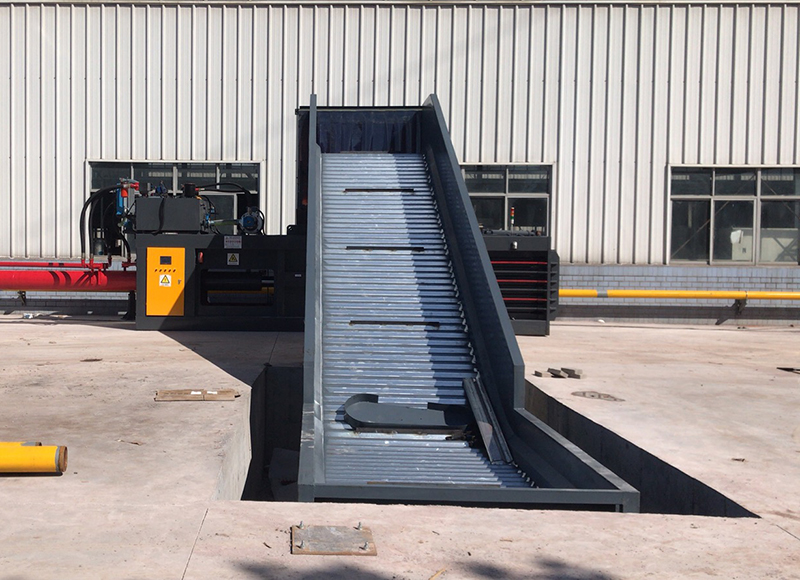
Industries That Benefit from Paper & Cardboard Balers
Packaging & Manufacturing – Compact leftover cartons,corrugated boxes,and paper waste.
Retail & Distribution Centers – Manage high-volume packaging waste effectively.
Recycling & Waste Management – Convert paper waste into recyclable,high-value bales.
Publishing & Printing – Dispose of outdated newspapers,books,and office paper efficiently.
Logistics & Warehousing – Reduce OCC and packaging waste for streamlined operations.
https://www.nkbaler.com
Email:Sales@nkbaler.com
WhatsApp:+86 15021631102
Post time: Dec-19-2025