With the advancement of “dual carbon” goals and the deepening of the circular economy, the technological development of Scrap Plastic Baler Press, a key piece of equipment for recycling, is rapidly evolving towards greater intelligence, efficiency, environmental friendliness, and integration. These trends are not only improving the performance of the equipment itself but also reshaping the operating model of the entire recycling industry.
Intelligentization and automation are core trends. The new generation of balers is increasingly equipped with advanced sensors, Internet of Things (IoT) modules, and artificial intelligence (AI)-based visual recognition systems. These systems can automatically monitor material filling levels, identify and remove unsuitable foreign objects (such as metal or large hard objects), monitor equipment operating status in real time (pressure, temperature, vibration, etc.), and perform early warning maintenance. Through cloud platforms, managers can remotely monitor the output, energy consumption, and fault codes of multiple machines, achieving data-driven management and optimized scheduling. Automation has evolved from simple automatic strapping to fully unmanned operation, including automatic feeding, compression, strapping, bale ejection, stacking, and even automatic connection of the strapping tape.
Energy-saving and environmentally friendly design is receiving increasing attention. The motor and hydraulic system, employing variable frequency technology, can dynamically adjust power output according to the actual load, significantly reducing energy consumption during no-load and low-load conditions. New hydraulic oil and sealing technologies aim to reduce leakage and contamination. Furthermore, equipment noise control has been enhanced, improving the working environment. Modular and flexible design allows a single machine to adapt to different sizes and materials of plastic containers and even other lightweight waste materials (such as cardboard boxes and films) by changing molds or adjusting parameters, improving equipment utilization. In the future, balers may be more deeply integrated into the “Internet + Recycling” system, becoming the core processing unit of intelligent recycling stations or regional recycling networks, achieving intelligent management across the entire chain from disposal to baling and data traceability.
Nick Baler’s plastic and PET bottle balers offer a highly efficient and economical solution for compressing various plastic waste materials, such as PET bottles, plastic film, HDPE containers, and shrink wrap. Ideal for waste management facilities, recycling centers, and plastic manufacturing plants, these balers can reduce plastic waste volume by more than 80%, significantly improving storage capacity and lowering transportation costs.
Available in manual, semi-automatic, and fully automatic models, Nick Baler’s equipment accelerates waste processing, reduces labor requirements, and boosts productivity for businesses engaged in large-scale plastic recycling operations. By streamlining waste compaction, these balers help industries enhance sustainability while cutting operational expenses.
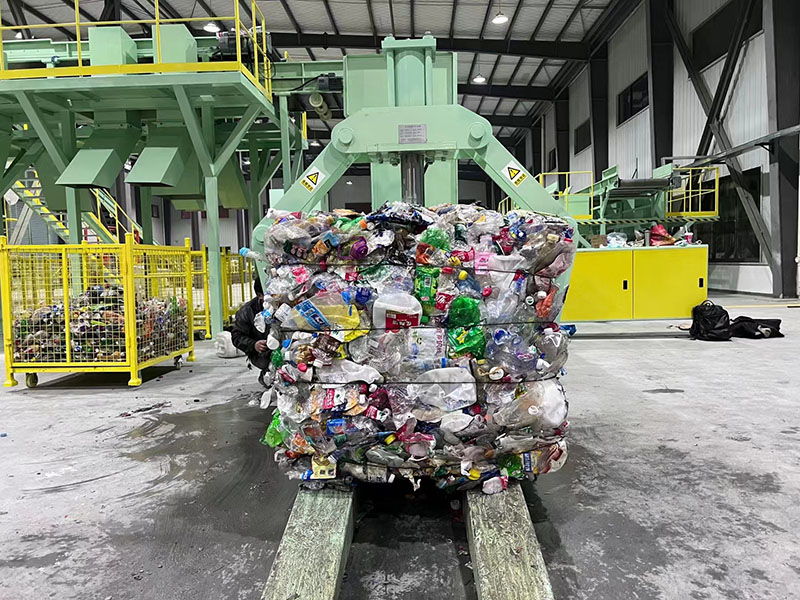
Why Choose Nick Baler’s Scrap Plastic Baler Press?
Reduces plastic waste by up to 80%, cutting storage and transportation costs.
Automatic and semi-automatic options, suited for small to high-production facilities.
Durable hydraulic systems for high-pressure compression and long-term use.
Trusted by recycling centers, beverage manufacturers, and plastic processing plants.
Designed for PET, HDPE, LDPE, plastic film, and mixed plastic materials.
https://www.nkbaler.com
Email:Sales@nkbaler.com
WhatsApp:+86 15021631102
Post time: Dec-24-2025