The main differences between small and ordinary waste paper balers lie in equipment size, applicable scenarios, processing capacity, and cost-effectiveness. Specific differences are as follows:
1. Size and Structural Design: Small waste paper balers typically feature a compact design, occupying little space (1-5 square meters) and weighing less (0.5-3 tons), making them easy to install or move in space-constrained locations (such as community recycling stations and small warehouses). Their structure is relatively simple, with lower hydraulic system power (15-30kW), using a single-cylinder or double-cylinder design, suitable for lightweight operations. Ordinary waste paper balers, on the other hand, are mostly fixed structures, occupying a larger area (5-15 square meters), weighing 5-20 tons, with higher hydraulic system power (30-75kW), often equipped with multi-cylinder linkage devices, and capable of withstanding higher pressures (100-300 tons).
2. Processing Capacity and Efficiency: Small equipment generally processes 1-5 tons per day, with a longer baling cycle (3-10 minutes/bale), suitable for scenarios with low waste paper generation (such as convenience stores and small supermarkets). Standard models can process 5-30 tons per day, with strong compression force (200-500 tons of pressure), short baling cycle (1-3 minutes/bundle), and high bale density (500-800 kg/m³), making them suitable for large-scale operations in waste paper mills, logistics centers, and other similar settings.
3. Automation Level: Smaller machines are mostly semi-automatic, relying on manual feeding and bundling, with simple control systems (buttons or basic PLC). Standard models are generally equipped with fully automatic feeding systems, infrared sensors, and intelligent PLC control panels, automatically performing compression, bundling, and counting functions. Some models also support IoT remote monitoring.
4. Cost and Maintenance: Small balers have lower purchase costs (20,000-100,000 RMB), low energy consumption (30-80 kWh per day), and simple maintenance (monthly lubrication and maintenance required). However, bale sizes are limited (commonly 30×30×50 cm). Standard models have a high initial investment (100,000-500,000 RMB), require installation and commissioning, and involve complex maintenance such as regular hydraulic oil changes (every 500 hours) and filter cleaning. However, they support customized bale sizes (up to 120×80×200cm), resulting in lower overall long-term operating costs.
5. Applicable Scenarios: Smaller machines are suitable for decentralized, low-frequency operations such as individual recyclers and community collection points; standard models are used in centralized, continuous production scenarios such as waste paper processing plants and paper mills, significantly reducing transportation costs (volume reduced by 3-5 times after compression).
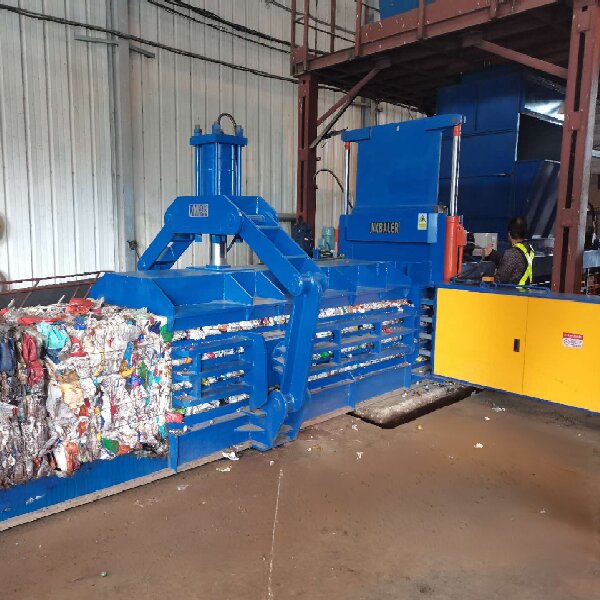
In summary, smaller machines excel in flexibility and low investment, while standard models offer advantages in processing efficiency and economies of scale. Users should choose rationally based on their average daily processing volume, site conditions, and budget.
https://www.nkbaler.com
Email:Sales@nkbaler.com
WhatsApp:+86 15021631102
Post time: Dec-16-2025