In the context of the booming resource recycling industry, waste paper balers, as core equipment, have always been a focus of attention for potential investors and practitioners in terms of price range. The final price of a waste paper baler is not a fixed figure, but rather the result of multiple intertwined variables. So, what key factors influence its market price?
First, the equipment’s production capacity and specifications are decisive factors. Different models of balers vary significantly in processing capacity, baling density, and bale size. Small manual or semi-automatic equipment is suitable for scenarios with limited waste paper production, while large fully automatic production lines can meet the high-intensity operational needs of recycling centers or large paper mills. Obviously, the higher the processing capacity and the higher the degree of automation, the higher the technological content and manufacturing cost, which is directly reflected in the selling price. Second, the brand and quality of core components are crucial. The durability of the hydraulic system, electrical control system, and steel directly affects the equipment’s stability, service life, and baling effect. Equipment using internationally renowned brand hydraulic components and PLC control systems may have a higher initial purchase cost, but in the long run, its advantages of low failure rate and high efficiency bring a more considerable return on investment.
Furthermore, technological innovation and added features also affect price. For example, the inclusion of automatic weighing systems, intelligent bundling devices, or remote monitoring capabilities improves operational convenience and management efficiency, but also increases equipment complexity and cost. Market competition and brand premium cannot be ignored. Well-known brands, with their mature technology, comprehensive after-sales service systems, and market reputation, often command higher prices than emerging brands. However, high-quality after-sales service—including installation and commissioning, operation training, regular maintenance, and rapid spare parts supply—is itself a valuable asset, effectively reducing users’ later operational risks and downtime losses.
In conclusion, the price of a waste paper baler is a comprehensive reflection of equipment performance, quality, brand, and service. When inquiring about prices, users should delve deeper into “what is the processing efficiency and long-term benefits per unit of investment?” rather than simply focusing on initial figures. Choosing a cost-effective baler means achieving the optimal balance between cost and output throughout the equipment’s lifecycle.
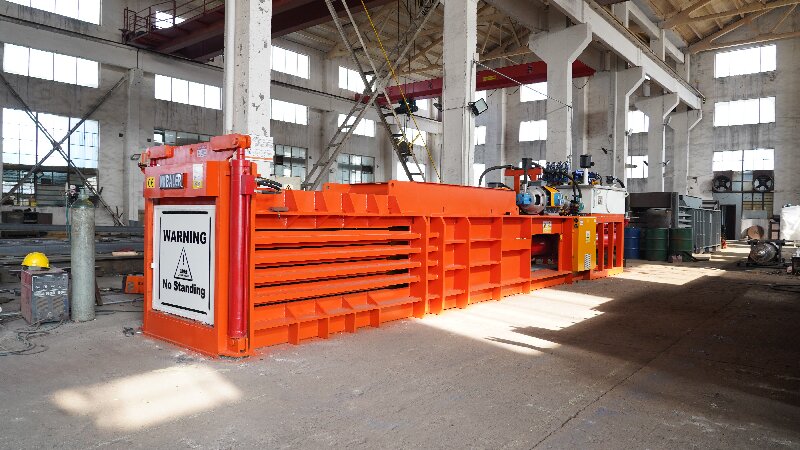
Nick Baler’s waste paper and cardboard balers are designed to efficiently compress and bundle materials like corrugated cardboard (OCC),Newpaper,Waste Paper,magazines,office paper,Industrial Cardboard and other recyclable fiber waste.These high-performance balers help logistics centers,waste management facilities,and packaging industries reduce waste volume,improve operational efficiency,and cut transportation costs.
As global demand for sustainable packaging solutions grows,our automated and manual baling machines provide the perfect solution for businesses handling large volumes of recyclable paper materials.
Nick mechanical hydraulic baling machine is specially used in the recovery and packaging of loose materials such as waste paper,waste cardboard,carton factory,waste book,waste magazine,plastic film,straw and other loose materials.
https://www.nkbaler.com
Email:Sales@nkbaler.com
WhatsApp:+86 15021631102
Post time: Jan-14-2026