Cardboard Box Baler transform piles of messy waste paper into neat, solid square bales. This seemingly simple process actually involves a series of precisely coordinated steps. Understanding its complete workflow helps us gain a deeper understanding of the machine’s operating secrets.
Standard work cycle typically begins with the “feeding stage.” Operators feed sorted waste paper, cardboard, and other materials into the baler’s feed hopper (or pre-compression bin) via conveyor belt, steel grabber, or manually. Fully automatic models are often equipped with a horizontal pre-compression device to initially compress a large amount of loose material, increasing the filling rate of the main compression chamber and improving efficiency. When the material in the compression chamber reaches a preset weight or volume, or when a photoelectric sensor detects a designated height, the equipment automatically or manually triggers the core “compression stage.”
At this point, the main compression cylinder, driven by hydraulic energy, pushes the pressure head (push plate) forward, applying tremendous pressure to the waste paper inside the chamber. Depending on the design, compression may be completed in one step or through multiple progressive compressions. Under high pressure, air between the waste paper fibers is rapidly expelled, causing the material volume to shrink dramatically and its density to increase significantly. After compression, the equipment enters the “bundling preparation stage.” The pressure head may maintain pressure or retract slightly to create space for bundling. Next comes the “bundling stage,” where manual or automatic bundling devices (such as threaders or strapping machines) thread and tighten the binding tape (usually steel wire or plastic strapping) around the compressed, dense bale according to a preset number of passes, then fasten the locking head to securely bind the bale.
Finally, the “pushing and unloading stage” begins. The main compression chamber door (side or bottom door) opens, and the unloading cylinder (or the main cylinder’s return stroke) smoothly pushes the bundled bale out of the machine, onto a pallet or conveyor. Subsequently, all moving parts reset, the compression chamber door closes, and the equipment is ready to begin the next work cycle. The entire process is interconnected, with the electrical control system precisely controlling the hydraulic system and mechanical components, achieving high efficiency and standardization in waste paper processing.
Nick Baler’s Cardboard Box Baler deliver high-efficiency compression and bundling for various recyclable materials,including corrugated cardboard (OCC),newspaper,mixed paper,magazines,office paper,and industrial cardboard.These robust baling systems enable logistics centers,waste management operators,and packaging companies to significantly reduce waste volume while enhancing workflow productivity and lowering logistics expenses.
With increasing worldwide emphasis on sustainable packaging practices,our comprehensive range of automated and semi-automatic baling equipment offers tailored solutions for enterprises managing substantial quantities of paper-based recyclables.Whether for high-volume processing or specialized applications,Nick Baler provides reliable performance to support your recycling operations and sustainability goals.
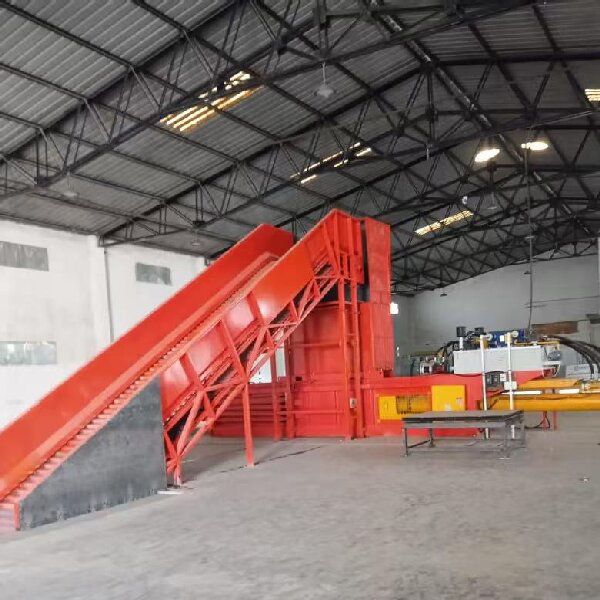
Why Choose Nick Baler’s Cardboard Box Baler?
Reduces Cardboard Box Baler volume by up to 90%,maximizing storage and transport efficiency.
Available in fully automatic and semi-automatic models,tailored for different production scales.
Heavy-duty hydraulic compression,ensuring dense,export-ready bales.
Optimized for recycling centers,logistics hubs,and packaging industries.
Low-maintenance design with user-friendly controls for hassle-free operation.
https://www.nkbaler.com
Email:Sales@nkbaler.com
WhatsApp:+86 15021631102
Post time: Dec-18-2025