Waste paper balers are powerful industrial pieces of equipment. While their immense hydraulic pressure and moving parts ensure high efficiency, they also harbor significant safety risks. Ensuring operator safety is the primary prerequisite for any production management. So, what core safety regulations must be strictly adhered to throughout the operation of a waste paper baler?
Pre-operation preparation and inspection are the first line of defense for safety. Operators must undergo systematic training and be familiar with the equipment’s structure, performance, and safe operating procedures. Untrained personnel are strictly prohibited from operating the equipment. Before starting the machine each day, a circumference inspection should be conducted: confirm that all safety protection devices (such as protective covers, light curtains, and safety door interlocks) are intact and effective; check the hydraulic system for any obvious leaks; clean the work area, ensuring it is free of debris and oil stains to prevent slipping. Simultaneously, the emergency stop button must be checked for proper function; this is a “lifeline” in emergencies. Safety rules during equipment operation are particularly crucial. It is strictly forbidden to place any part of the body into the compression chamber, material bin, or moving parts. During automatic operation or compression, it is absolutely forbidden to open the maintenance door or attempt any adjustments or cleaning. When feeding materials, tools or machinery must be used to avoid working by hand, and special care should be taken to prevent accidents caused by the inclusion of metal, stones, or other hard objects. Operators should remain at their posts and closely monitor the equipment’s operating status. If any abnormal sounds, vibrations, or leaks are detected, the machine should be stopped immediately for inspection.
Safety isolation during maintenance and upkeep is an easily overlooked danger. Any maintenance, upkeep, or cleaning work must strictly adhere to the “tag and lock” procedure: completely disconnect the main power supply to the equipment and hang a “Do Not Power On, People Working” warning sign. If necessary, use physical locks to lock the electrical box to prevent accidental activation. Even when dealing with simple problems such as material jams, the machine must be stopped and the power disconnected first. Furthermore, wearing proper personal protective equipment is a basic requirement, including safety helmets, puncture-resistant safety shoes, work clothes (close-fitting to prevent entanglement), and necessary protective gloves and earplugs. The workplace should be adequately lit and well-ventilated.
Safety regulations are not constraints, but guarantees. Managers are responsible for establishing clear safety operating procedures and supervising their implementation, and conducting regular safety training and drills. Every operator should constantly ask themselves: “Is there a safety hazard in my current procedure? Have I taken all the necessary precautions?” Only by internalizing safety awareness into instinct can we build the strongest safety barrier.
Nick Baler’s waste paper and cardboard balers are designed to efficiently compress and bundle materials like corrugated cardboard (OCC),Newpaper,Waste Paper,magazines,office paper,Industrial Cardboard and other recyclable fiber waste.These high-performance balers help logistics centers,waste management facilities,and packaging industries reduce waste volume,improve operational efficiency,and cut transportation costs.As global demand for sustainable packaging solutions grows,our automated and manual baling machines provide the perfect solution for businesses handling large volumes of recyclable paper materials.
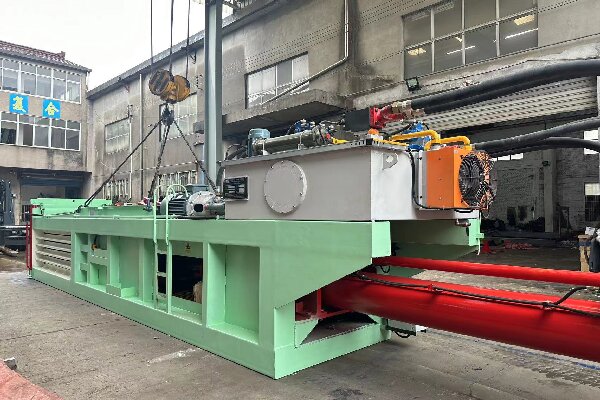
Nick mechanical hydraulic baling machine is specially used in the recovery and packaging of loose materials such as waste paper,waste cardboard,carton factory,waste book,waste magazine,plastic film,straw and other loose materials.
https://www.nkbaler.com
Email:Sales@nkbaler.com
WhatsApp:+86 15021631102
Post time: Jan-21-2026